
The evolution of modern manufacturing industry cannot be separated from a silent but accurate technological support, which is CNC machining. Many people think it is just a mechanical action of cutting metal on a machine tool, but in fact, it has already penetrated into the capillaries of the industrial system. Today, let's talk about in which scenarios this technology plays an irreplaceable role.
The main focus is on automobile manufacturing. From the engine cylinder block to the battery tray of new energy vehicles, every component that requires high strength and consistency cannot be separated from the precise control of CNC machining. With the acceleration of vehicle iteration, the limitations of traditional molds have been broken, and flexible production has become the norm, which has also enabled Jiangmen CNC machining factories with rapid response capabilities to occupy a more core position in the supply chain.
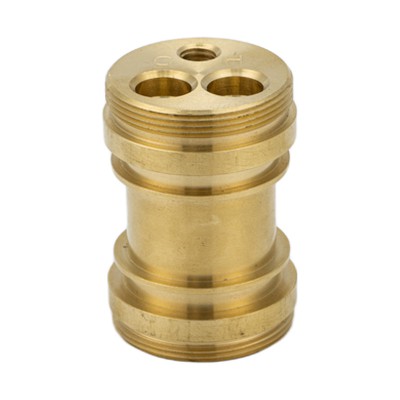
The aerospace industry has almost stringent requirements for accuracy. The aerodynamic shape of turbine blades and the micro hole array of fuselage structural components often have tolerances controlled at the micrometer level. This type of scenario not only tests the stability of the equipment itself, but also the accumulation of experience in process debugging. Many times, a mature post-processing program and clamping scheme can determine success or failure more than just machine parameters.
The medical device industry also heavily relies on CNC technology. Artificial joints, surgical instruments, and even micro implants are mostly made of titanium alloys or polymer materials, which are difficult to process but require high biocompatibility. These types of products are usually produced in small batches and multiple batches, with particularly strict requirements for flexible manufacturing. Many Jiangmen CNC machining factories that focus on better manufacturing have gradually established technical barriers through long-term accumulation of special processes.
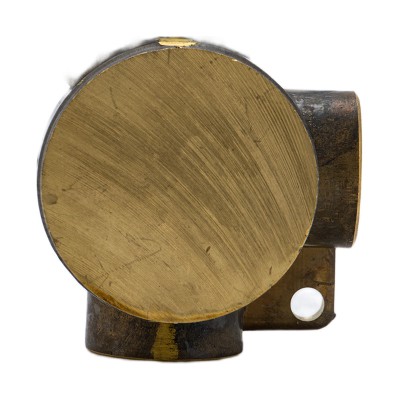
Consumer electronics is another high-frequency application field. The phone frame and wearable device casing should have a smooth and knife free surface, while the internal structure should be compact enough. The mixed processing of aluminum magnesium alloy and ceramic materials presents new challenges for tool paths and cooling methods. Faced with this high-frequency iteration, many Jiangmen CNC machining factories have begun to introduce automated loading and unloading and intelligent measurement to stabilize delivery quality.
Mold and precision instrument manufacturing are the foundation of CNC machining. Injection molds, stamping molds, and measuring instrument housings, almost every set of better equipment has undergone repeated polishing through CNC cutting. Technical iteration may seem cold, but behind it lies the engineers' constant trial and error in material properties and cutting forces. What truly widens the gap is never the number of devices, but the depth of the process library and the team's experience reuse rate.
After observing the industry for a long time, one will find that CNC machining is no longer just about doing things for others. It is more like a translator for manufacturing languages, converting 3D models into solid parts. In the future, with the popularization of multi axis linkage and online detection, machining logic will evolve towards a more intelligent direction. When laying out production capacity, enterprises may pay more attention to the process accumulation and flexible response capability of suppliers, after all, in the second half of the manufacturing industry, stability and improvement are more valuable than blind expansion.
Article source: Jiangmen CNC Machining Factorywww.yilin-precision.com